Azelaic Acid: Who It’s For, How It Works, and How to Use It Correctly
A Pro-Aging Skin Health Perspective from Good Glow Skin Therapy
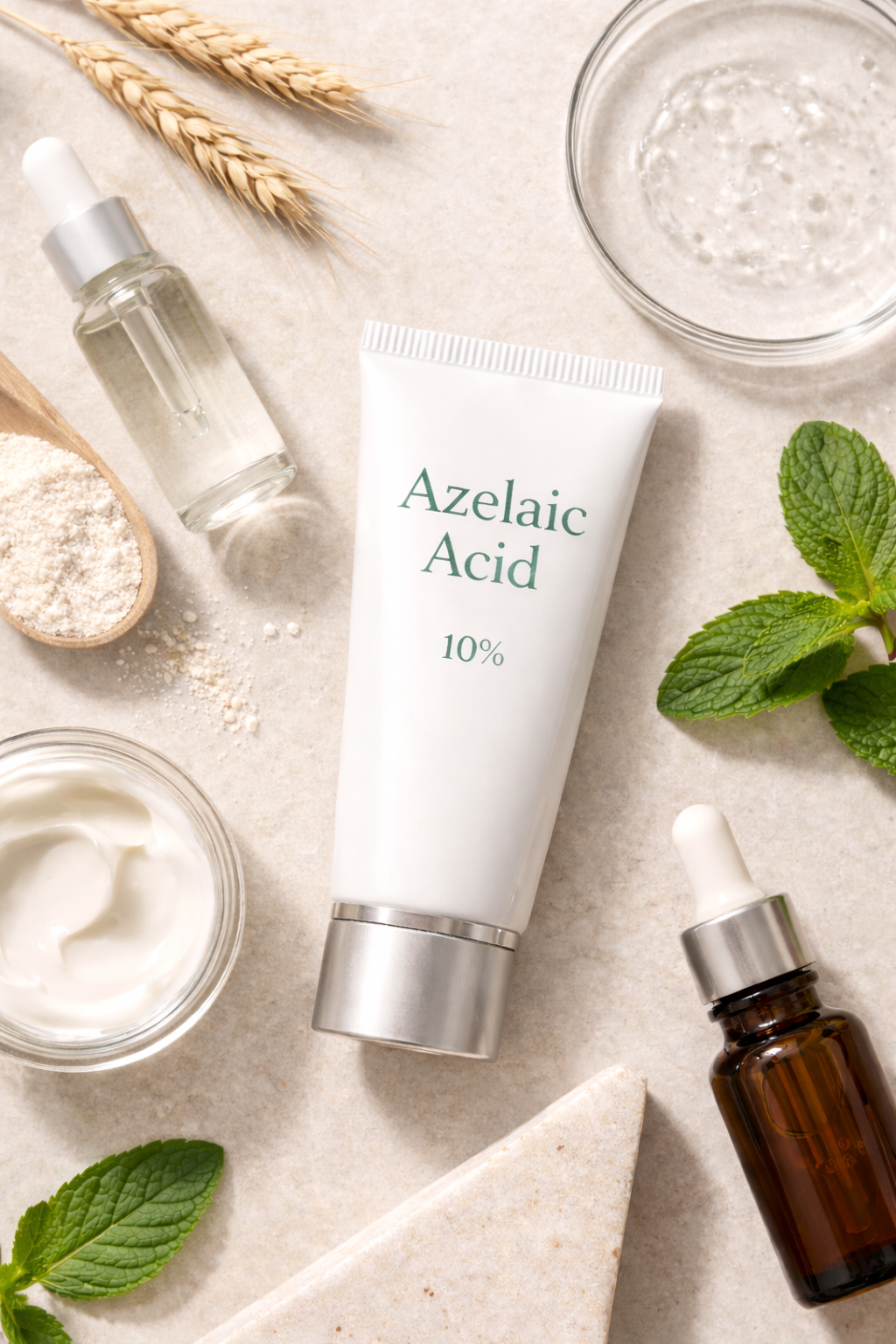
Azelaic acid is one of the most underrated yet powerful ingredients in skincare. It’s gentle, effective, and incredibly versatile — especially for melanin-rich skin, sensitive skin, and those struggling with hyperpigmentation, acne, or redness.
But it’s also widely misunderstood.
This Glow Talk breaks down what azelaic acid actually is, how it compares to other acids, who it works best for, when to use it, and how to choose the right strength without compromising your skin barrier.
What Category Does Azelaic Acid Fall Into?
Azelaic acid is not an AHA and not a BHA.
It belongs to its own category.
Azelaic acid is a dicarboxylic acid, naturally derived from grains like wheat and barley. Unlike exfoliating acids, it works by calming inflammation and regulating how pigment and bacteria behave in the skin.
This is why it’s often better tolerated than stronger exfoliating acids.
AHA vs. BHA — A Simple Breakdown
AHAs (Alpha Hydroxy Acids)
Common examples include glycolic, lactic, and mandelic acid.
AHAs:
• exfoliate the surface of the skin
• improve texture and brightness
• increase cell turnover
Best for:
• dull or dry skin
• uneven texture
• sun damage
BHAs (Beta Hydroxy Acids)
The most common BHA is salicylic acid.
BHAs:
• penetrate oil
• unclog pores
• reduce congestion
Best for:
• oily skin
• acne-prone skin
• blackheads
Where Azelaic Acid Fits
Azelaic acid works differently.
It:
• reduces inflammation
• helps regulate melanin production
• calms redness
• supports acne control
• improves tone and texture gently
This makes it a powerful option for clients who cannot tolerate frequent exfoliation.
Who Azelaic Acid Works Best For
Azelaic acid is especially beneficial for:
• hyperpigmentation
• post-inflammatory hyperpigmentation (PIH)
• melasma-prone skin
• acne with lingering dark marks
• rosacea-prone skin
• sensitive or reactive skin
• melanin-rich skin
• clients who struggle with stronger acids or retinoids
It’s often a smarter starting point than aggressive exfoliation.
When to Use Azelaic Acid (AM vs. PM)
Azelaic acid can be used morning or night, depending on your routine.
Morning use:
• helps calm inflammation throughout the day
• supports pigment prevention
• pairs well with sunscreen
Night use:
• supports acne and texture
• works well on non-retinoid nights
Key rule:
Consistency matters more than frequency. Avoid layering with too many strong actives.
Azelaic Acid Percentages Explained
5–10%
• over-the-counter range
• ideal for beginners
• suitable for sensitive skin
• helps with mild pigmentation and redness
10–15%
• stronger professional or OTC formulas
• more effective for acne and pigment
• still generally well tolerated
15–20% (Prescription strength)
• reserved for stubborn pigment or acne
• should be used carefully
• not intended for long-term daily use without guidance
Higher strength does not equal better results. Skin tolerance and consistency matter more.
How to Use Azelaic Acid Without Irritation
Best practices include:
• apply to clean, dry skin
• use a thin layer
• follow with a barrier-supportive moisturizer
• avoid stacking with multiple exfoliants
• wear sunscreen daily
Common mistakes:
• overusing
• mixing too many actives
• expecting overnight results
Azelaic Acid and Pro-Aging Skin
Azelaic acid fits beautifully into a pro-aging routine.
It supports:
• reduced chronic inflammation
• improved clarity and tone
• barrier health
• a smoother, more even glow
It doesn’t chase youth — it supports skin health through every phase.
Where Professional Treatments Fit In
Azelaic acid works best when paired with professional care.
Monthly facials and chemical peels:
• improve product penetration
• help lift pigment gradually
• support cell turnover safely
• prevent overuse of actives
Professional guidance ensures balance, not burnout.
The Bottom Line
Azelaic acid isn’t flashy — it’s reliable.
When used correctly, it’s one of the most effective ingredients for calming, clarifying, and supporting healthy skin, especially for pigment-prone and melanin-rich complexions.
At Good Glow Skin Therapy, the focus is always on education, balance, and long-term skin health.
Stay glowing,
Diana Grace
Founder, Good Glow Skin Therapy