Not All Acne Is the Same Understanding the Different Types of Acne and Acne-Like Conditions
June is Acne Awareness Month, and there's no better time to talk about one of the most common concerns I see in the treatment room: acne.
If you've ever felt frustrated because a product that worked for someone else didn't work for you, you're not alone. One of the biggest misconceptions about acne is that all breakouts are the same. The truth is, acne is not a one-size-fits-all condition.
Different types of acne can have different causes, triggers, and treatment approaches. In some cases, what appears to be acne may not actually be acne at all. That's why understanding the type of breakout you're experiencing is often the first step toward finding the right solution.
From blackheads and whiteheads to hormonal breakouts, cystic acne, folliculitis, and fungal acne, each condition has its own unique characteristics and may respond differently to treatment.
In this week's Glow Talk, we're taking a closer look at some of the most common types of acne and acne-like conditions, what may contribute to them, and what ingredients and treatments can help support clearer, healthier skin.
Because when it comes to acne, understanding what you're treating is just as important as how you're treating it.
Let's Glow Talk About It.
Comedonal Acne
The Clogged Pore Acne
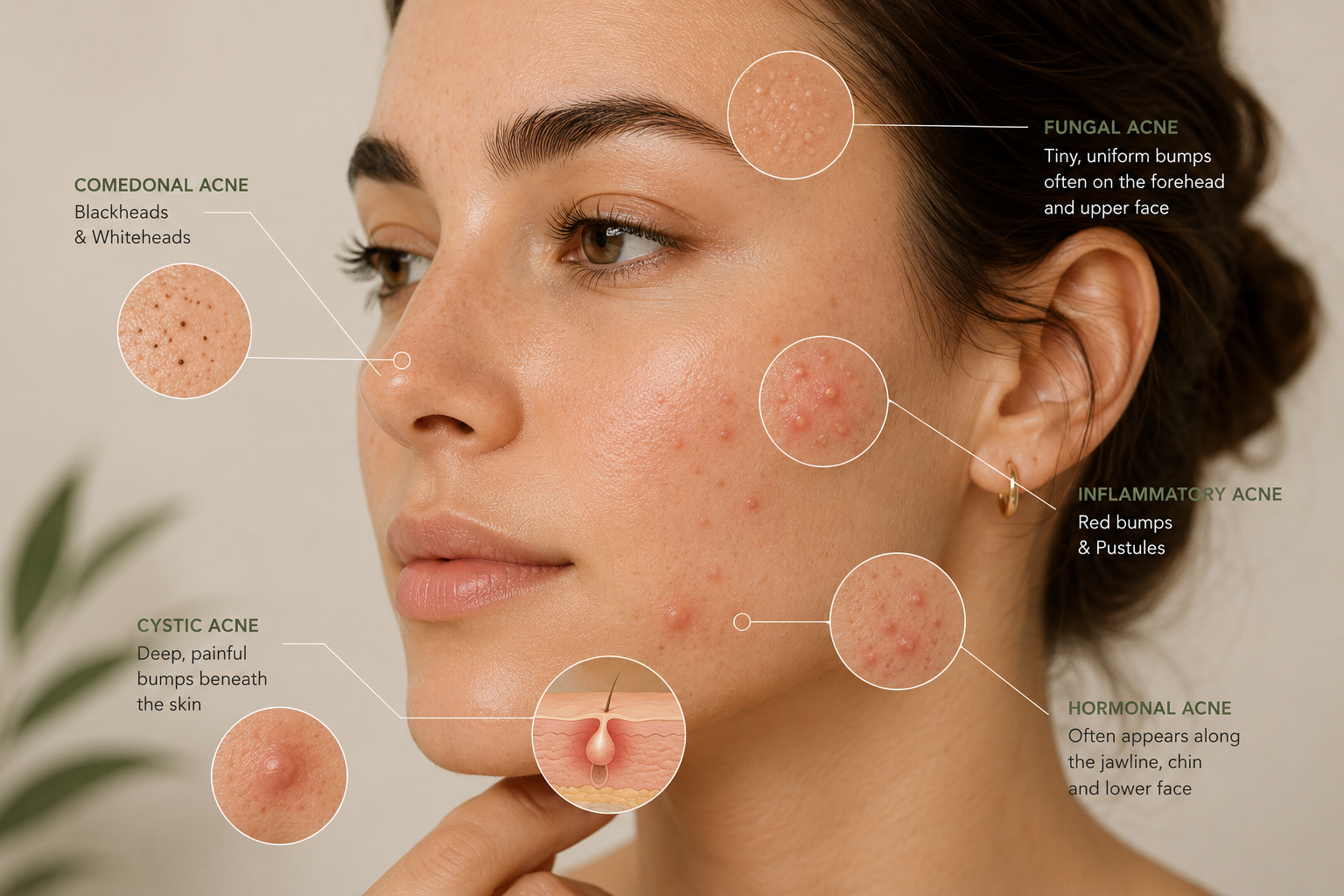
Comedonal acne is often the earliest stage of acne and is considered non-inflammatory.
You may notice:
Blackheads
Whiteheads
Rough skin texture
Small flesh-colored bumps
This type of acne develops when oil and dead skin cells become trapped inside the pore.
Common contributors include:
Excess oil production
Inadequate exfoliation
Pore-clogging products
Hormonal fluctuations
The good news is that comedonal acne often responds very well to consistent skincare. Ingredients like salicylic acid, mandelic acid, and retinoids can help encourage healthy cell turnover and keep pores clear. Professional exfoliation treatments and acne-focused facials can also help prevent clogged pores from progressing into more inflamed breakouts.
Inflammatory Acne
The Red & Angry Acne
Inflammatory acne occurs when clogged pores become irritated and inflamed.
You may notice:
Red bumps (papules)
Pimples with visible pus (pustules)
Tender or sore skin
Increased redness
Common triggers include:
Inflammation
Acne-causing bacteria
Hormonal fluctuations
Stress
Skin barrier disruption
When treating inflammatory acne, the goal is not to strip the skin—it's to calm it. Ingredients such as niacinamide, salicylic acid, benzoyl peroxide, green tea extract, and hypochlorous acid can be helpful depending on the individual. Blue LED light therapy and professional acne treatments may also help reduce inflammation and support healing.
One of the most common mistakes people make is aggressively drying out inflammatory acne. Harsh products can further irritate the skin and make redness worse.
Cystic Acne
The Deep & Painful Acne
Cystic acne develops deeper beneath the surface of the skin and is often one of the most frustrating forms of acne to manage.
You may notice:
Large, painful bumps beneath the skin
Long-lasting breakouts
Tenderness
Increased risk of scarring
Common contributors include:
Hormones
Genetics
Chronic inflammation
Stress
Because cystic acne develops so deeply within the skin, it often benefits from a combination of professional treatments, consistent home care, and sometimes medical support. Ingredients like retinoids, salicylic acid, niacinamide, and benzoyl peroxide may be part of a treatment plan, but patience is essential.
If there's one takeaway here, it's this:
Do not pick or squeeze cystic acne.
Doing so can increase inflammation, prolong healing, and significantly increase the risk of scarring.
Hormonal Acne
The Cycle-Related Acne
Hormonal acne is incredibly common, especially among adult women.
You may notice:
Chin breakouts
Jawline acne
Neck breakouts
Deep, tender blemishes
Hormonal acne can be influenced by:
Menstrual cycles
PCOS
Perimenopause
Menopause
Stress
Changes in hormonal birth control
Many women notice their breakouts follow a predictable pattern each month. Tracking those patterns can provide valuable clues when developing a treatment plan.
Supportive ingredients such as retinoids, azelaic acid, salicylic acid, and niacinamide can help manage breakouts while supporting overall skin health. Professional treatments, stress management, quality sleep, and consistency often play a significant role in improving hormonal acne.
Folliculitis
The Acne Imposter
Folliculitis isn't technically acne at all.
Folliculitis occurs when the hair follicle becomes inflamed.
You may notice:
Small red bumps around hair follicles
Itching or tenderness
Clusters of bumps
Breakouts after shaving or waxing
Common causes include:
Friction
Sweat
Bacteria
Shaving irritation
Occlusive clothing
Because folliculitis can look very similar to acne, many people unknowingly treat it incorrectly. Depending on the cause, antibacterial cleansers, hypochlorous acid sprays, improved shaving practices, and reducing friction may help improve symptoms.
Accurate identification is key.
Fungal Acne
Not Actually Acne
Despite its name, fungal acne isn't true acne.
Also known as Malassezia folliculitis, fungal acne is caused by an overgrowth of yeast on the skin.
You may notice:
Tiny, uniform bumps
Itching
Breakouts on the forehead, chest, shoulders, or back
Symptoms that worsen with heat and sweat
Unlike traditional acne, fungal acne is not caused by clogged pores or acne bacteria.
This is important because some traditional acne treatments may not improve fungal acne and can sometimes make it worse. Depending on the situation, ingredients such as sulfur, zinc pyrithione, or antifungal treatments may be recommended. Keeping the skin cool, dry, and avoiding heavy occlusive products can also be helpful.
Different cause. Different solution.
Acne Mechanica
The Friction Acne
Acne mechanica develops when repeated pressure, friction, or rubbing irritates the skin.
Common triggers include:
Face masks
Hats
Helmets
Headbands
Sports equipment
Tight clothing
Backpack straps
You may notice breakouts exactly where the friction occurs.
Fortunately, small changes can make a big difference. Regularly washing hats and workout gear, changing pillowcases frequently, reducing pressure when possible, and maintaining a gentle skincare routine can all help minimize breakouts. Ingredients like niacinamide and salicylic acid may also support clearer skin.
The Good News
If you've made it this far, here's what I want you to remember:
Not all acne is the same.
Different breakouts have different causes, different triggers, and often require different treatment approaches. That's why what works for a friend, family member, or favorite influencer may not work for you.
The first step toward clearer skin isn't buying the latest trending product or trying the strongest treatment you can find. The first step is understanding what you're treating.
Whether you're dealing with blackheads, inflammatory acne, hormonal breakouts, cystic acne, folliculitis, fungal acne, or acne caused by friction, there are more treatment options available today than ever before. With the right approach, consistency, and support, improvement is absolutely possible.
Remember, healing takes time. Healthy skin is rarely the result of a quick fix. It's built through patience, education, and a routine designed for your unique skin.
At Good Glow Skin Therapy, my goal is to help you better understand your skin, identify potential triggers, and create a personalized plan that supports healthy, confident skin for the long term.
There is hope for clearer skin.
Stay glowing,
Diana H. Grace
Founder, Good Glow Skin Therapy