Stop Using Bar Soap on Your Face.
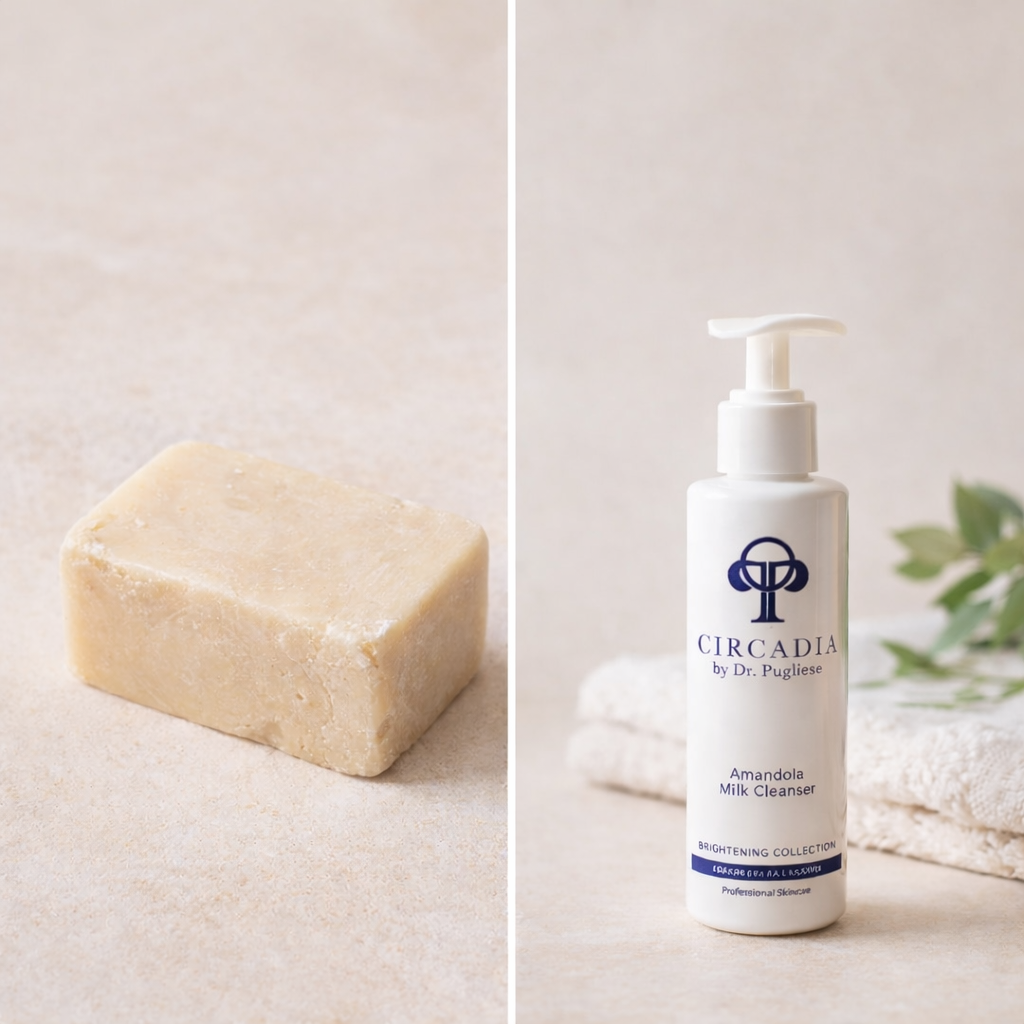
Yes. I’m going to keep saying it.
Because so many people are still doing this — and wondering why their skin is dry, irritated, reactive, and suddenly “sensitive.”
Let’s glow talk about what bar soap actually does to your skin over time.
Soap Is Designed for Skin That Is Not Your Face
Traditional bar soap is formulated to remove:
Dirt
Sweat
Body oils
Environmental debris
It is intentionally stripping.
Most bar soaps have a high alkaline pH (often around 9–10), while healthy facial skin sits at a slightly acidic pH of about 4.5–5.5.
That difference matters.
When you repeatedly cleanse your face with alkaline soap, you disrupt the acid mantle — your skin’s protective barrier.
What Happens Over Time
At first, it may seem fine.
Especially if you’re:
Younger
Naturally oilier
Male (thicker skin, more sebaceous activity)
You might even like the “squeaky clean” feeling.
But that tight, stripped feeling is not clean.
It’s compromised.
Over time, bar soap can:
Increase transepidermal water loss
Deplete natural lipids
Trigger inflammation
Disrupt the skin microbiome
Make skin more reactive
Your skin starts to overcompensate.
You may notice:
More oil production
Dry patches
Stinging with products
Redness that lingers
Breakouts that heal poorly
This is how chronic irritation begins.
As We Age, It Gets Worse
As we get older, our skin naturally:
Produces less oil
Loses collagen
Experiences slower barrier repair
Becomes more prone to sensitivity
When you continue using harsh cleansers into your 30s, 40s, and beyond, you accelerate barrier breakdown.
Chronic barrier disruption can contribute to:
Persistent redness
Rosacea flare tendencies
Chronic dehydration
Dullness
Increased hyperpigmentation
It may not happen overnight.
But repeated inflammation adds up.
Skin remembers.
“But I’ve Always Used It…”
That doesn’t mean your skin hasn’t been compensating.
Many people don’t realize their cleanser is the root issue.
They start layering:
Stronger moisturizers
Heavier oils
Soothing serums
When the real solution is correcting the cleanse step.
If your foundation is stripping your barrier daily, no serum can fully undo that.
What to Use Instead
Your facial cleanser should:
Respect your acid mantle
Support barrier function
Clean without stripping
Leave skin balanced — not tight
If your skin feels tight after cleansing, that is a sign something is off.
Healthy skin should feel comfortable.
Not squeaky.
The Bigger Picture
Barrier health determines:
How well your products work
How evenly your pigment behaves
How resilient your skin is long term
How gracefully your skin ages
If you’re serious about long-term skin health, your cleanser matters more than you think.
And bar soap is not it.
If Your Skin Feels Dry, Reactive, or “Suddenly Sensitive”
Start by evaluating your cleanser.
It’s often the most overlooked step — and the most damaging when incorrect.
If you’re local to Fairfield and unsure what your skin actually needs, a clinical skin assessment can help determine whether your barrier is compromised and what adjustments will restore balance.
Healthy skin begins with protection — not stripping.
Stay glowing,
Diana Grace
Founder, Good Glow Skin Therapy