LED Light Therapy: Choosing the Right Color for Your Skin
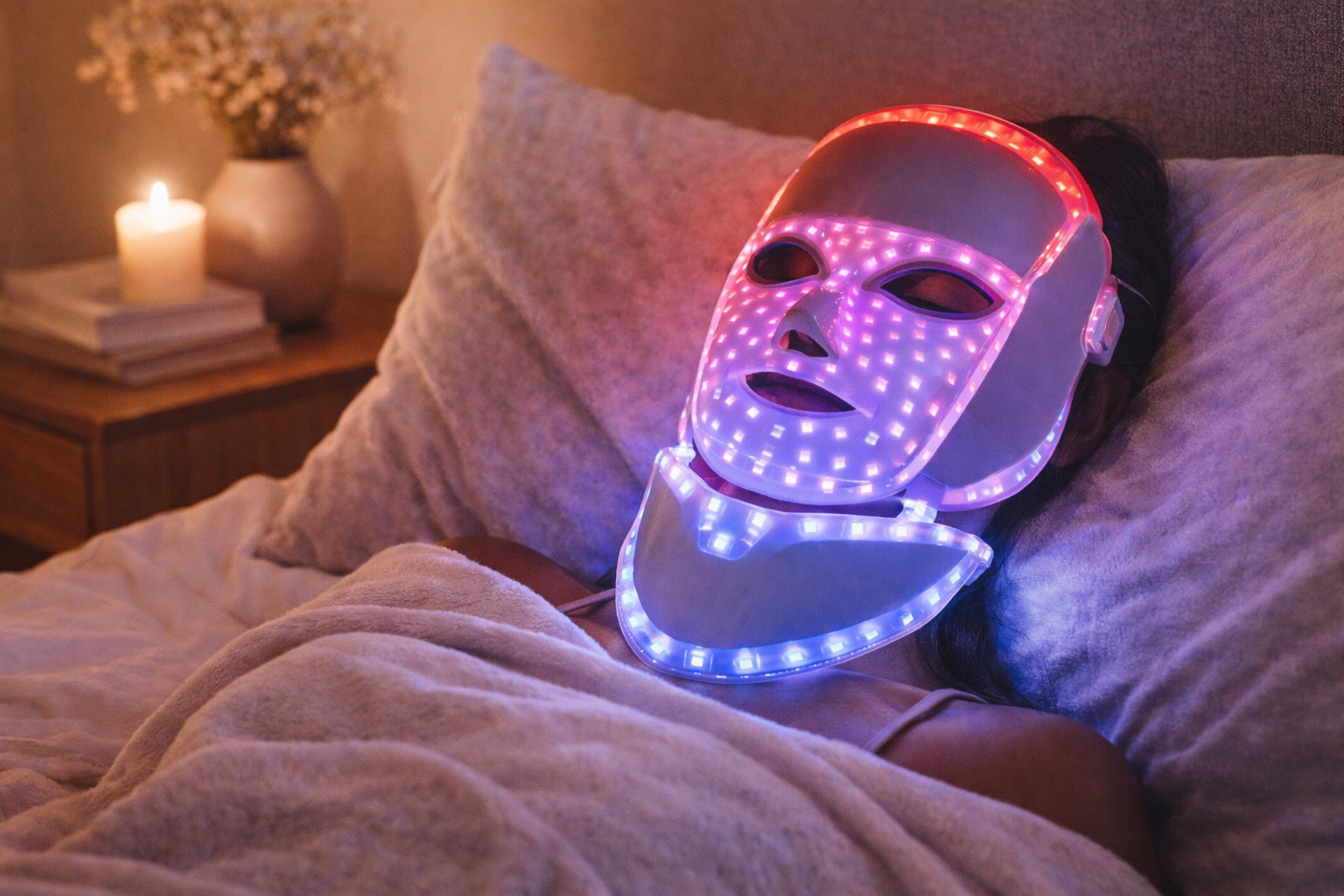
LED therapy is everywhere right now—from in-studio treatments to at-home face masks—and while it can be incredibly effective, it is not one-size-fits-all. Different light colors (wavelengths) create very different biological responses in the skin. Using the wrong light for your skin condition can quietly make things worse, especially if you’re dealing with melasma, rosacea, acne, or inflammation-prone, melanin-rich skin.
Let’s glow talk about it.
How LED Therapy Works
LED (light-emitting diode) therapy sends specific wavelengths of light into the skin to trigger cellular responses—like increasing energy production, calming inflammation, or targeting acne-causing bacteria. Each color penetrates at a different depth and does a different job .
What Each LED Color Actually Does
Red Light (≈ 600–660 nm)
Red light is best known for stimulating collagen, improving circulation, and supporting wound healing and overall skin rejuvenation .
Best for: dull, aging, or post-treatment skin that needs recovery.
Use with caution: because red light increases circulation and cellular activity, it can also increase heat and inflammation—which may aggravate melasma, rosacea, and inflamed acne if overused or used on reactive skin .
Blue Light (≈ 400–500 nm)
Blue light works on the surface of the skin to kill acne-causing bacteria and help reduce breakouts .
Best for: mild to moderate bacterial acne.
Avoid or use carefully if you have rosacea, inflammatory or cystic acne, or a compromised barrier, as blue light can be drying and irritating .
Green Light
Green light is often used to calm irritation and support a more even-looking tone. While it’s less studied than red or blue, it’s commonly included in devices designed for brightness and tone support .
Best for: uneven tone, mild pigmentation, or skin that needs gentle calming.
Yellow / Amber Light
Yellow (amber) light is used to soothe redness, improve circulation, and support lymphatic flow, making it helpful for sensitive or rosacea-prone skin .
Purple Light (Red + Blue)
Purple combines the healing and collagen-support of red with the bacteria-targeting of blue, creating a balanced option when multiple concerns are present .
Best for: adult acne, combination concerns, and clients who need both calming and clarity—when used thoughtfully.
Near-Infrared (≈ 700–850+ nm)
Near-infrared penetrates deepest to support tissue repair, circulation, and collagen and is commonly paired with red light in professional devices .
Best for: post-treatment recovery and deeper rejuvenation.
Why At-Home LED Masks Can Be Risky
At-home LED devices are not calibrated for medical skin conditions and usually default to red light—which can be the worst choice for pigment-prone or inflamed skin. Professional devices use specific, adjustable wavelengths chosen for your skin’s condition and tolerance .
At-home tools are lower-energy and can be helpful, but they don’t account for melasma, rosacea, or barrier status, so misuse can trigger flares or rebound pigmentation .
Why This Matters for Melanin-Rich & Reactive Skin
Melanin absorbs light and heat differently. When inflammation or heat rises, melanocytes respond by making more pigment—which means the wrong LED color can quietly darken melasma or PIH. That’s why customization matters.
What’s Most Common in the Treatment Room
In professional settings, you’ll most often see:
• Red LED for rejuvenation and healing
• Blue LED for acne
• Near-infrared for deeper repair
• Targeted combinations chosen for the client’s condition
This is why LED works best as part of a guided facial or treatment plan, not as a random at-home add-on.
The Good Glow Bottom Line
LED therapy is powerful—and powerful tools need skin science, not trends. The right color can calm, clarify, and rejuvenate. The wrong one can inflame, sensitize, and darken pigment.
At Good Glow Skin Therapy, LED is used intentionally, based on your skin’s needs, your barrier, and your pigment profile—so it supports your glow instead of working against it.
Stay glowing,
Diana Grace
Founder, Good Glow Skin Therapy
Sources
• Cleveland Clinic – LED light therapy basics, red & blue wavelengths, benefits and cautions
• CurrentBody – LED color benefits, near-infrared pairing
• Solawave – Amber/yellow light for redness & circulation
• RehabMart – Purple light (red + blue) overview
• TIME – At-home LED mask effectiveness and limitations