The Truth About SPF: The Good, The Bad & The Misunderstood
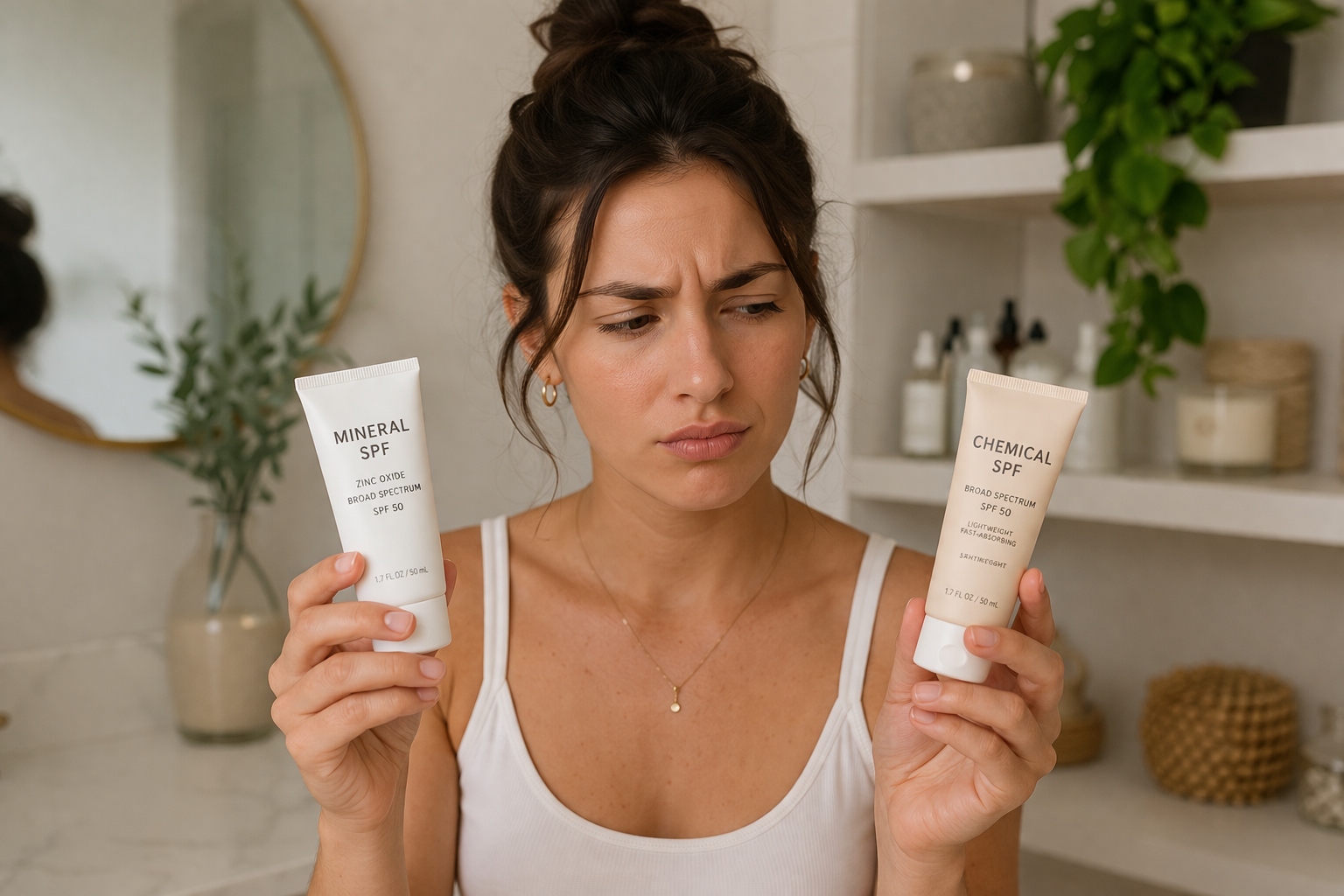
Let’s glow talk about it.
The Truth? You Still Need SPF.
Let's start here—because nothing else matters if we skip this part.
Daily sunscreen is one of the most important steps you can take to protect your skin from premature aging, hyperpigmentation (especially melasma), and, most importantly, skin cancer.
No matter your skin type, skin tone, or sensitivity level, SPF is non-negotiable.
Yet the conversation around sunscreen has become increasingly confusing. Between "clean," "reef-safe," mineral versus chemical, and conflicting advice online, it's easy to wonder what's actually true.
Let's simplify it.
The Good: Protection That Prevents & Preserves
Sunscreen protects your skin from ultraviolet (UV) radiation, one of the leading contributors to collagen breakdown, pigment disorders, DNA damage, and chronic inflammation within the skin.
Over time, daily UV exposure accelerates visible aging, contributes to uneven skin tone, and increases the risk of skin cancer.
Whether you choose a mineral or chemical sunscreen, the goal is the same: to protect your skin so it can function properly, repair itself, and maintain long-term health.
Melanin Is Beautiful, But It Isn't Sunscreen
One of the biggest myths in skincare is that darker skin doesn't need sunscreen.
While melanin does provide some natural protection against UV radiation, it does not prevent sun damage. In fact, naturally darker skin is estimated to provide the equivalent of only about SPF 13, while lighter skin provides much less. That level of protection simply isn't enough for everyday sun exposure.
For deeper skin tones, sunscreen isn't just about preventing sunburn—it's about protecting the skin from damage you may not immediately see.
Daily UV exposure can contribute to:
Hyperpigmentation and post-inflammatory dark marks that take longer to fade.
Melasma, which can affect every skin tone and is often worsened by both UV rays and visible light.
Premature collagen breakdown, leading to fine lines and loss of firmness over time.
Skin cancer. Although melanoma is less common in people with darker skin, it is often diagnosed at a later stage, making it more dangerous.
Healthy skin isn't determined by how easily you burn—it's determined by how well you protect it.
No matter your complexion, daily SPF helps preserve your skin's health, maintain an even skin tone, and protect the investment you're making in your skincare routine.
Mineral SPF: Gentle, But Not Always Perfect
Mineral sunscreens, also known as physical sunscreens, use ingredients like zinc oxide and titanium dioxide to primarily absorb while also reflecting and scattering UV radiation.
They're often recommended for sensitive, post-treatment, or reactive skin because they tend to be well tolerated and begin protecting immediately after application.
However, it's important to understand the nuance.
Some people may still experience irritation depending on the overall formulation—not just the active ingredients. Lower-quality formulas can feel heavy, drying, or leave a noticeable white cast. Additionally, not all zinc oxide is created equally. How it's processed and formulated plays a significant role in how elegant the product feels and how your skin responds.
Mineral sunscreen can be an excellent choice—but it isn't automatically the best choice for everyone.
Chemical SPF: Elegant, But Not Always Compatible
Chemical sunscreens use UV filters that absorb ultraviolet radiation and convert it into a small amount of heat before it can damage the skin.
Many people love them because they're lightweight, blend beautifully into the skin, and are easy to reapply without leaving a white cast.
For some individuals with sensitive or compromised skin, however, certain formulas may cause stinging, redness, or irritation—especially around the eyes or when the skin barrier is impaired.
That doesn't make chemical sunscreen harmful. It simply means it may not be the right fit for every skin type.
The "Reef-Safe" Conversation
This is where misinformation often takes over.
Terms like reef-safe, clean, and non-toxic are widely used, but they are not strictly regulated.
Certain chemical UV filters, such as oxybenzone and octinoxate, have been studied for their potential impact on coral reefs, leading many brands to formulate without them.
However, even mineral ingredients like zinc oxide have raised environmental concerns in certain forms and concentrations.
The reality is that no sunscreen is completely impact-free.
The Reality: Skin Protection Comes First
Avoiding sunscreen while searching for the "perfect" formula can leave your skin vulnerable to long-term damage.
Instead of asking which sunscreen is perfect, ask yourself:
Which sunscreen will I actually wear every single day?
That's the one that will protect your skin.
Consistency—not perfection—is what makes the biggest difference.
A More Intentional Approach
At Good Glow Skin Therapy, my philosophy isn't fear-based skincare—it's informed, intentional skincare.
Choose a sunscreen that feels comfortable, works with your skin, and fits naturally into your daily routine.
Support your skin by maintaining a healthy skin barrier, minimizing unnecessary heat exposure, and making sun protection a habit—not an afterthought.
Final Thoughts
There is no perfect sunscreen.
There is only the one that works best for your skin.
Whether your skin is fair, olive, deep, or richly melanated, daily SPF remains one of the most effective ways to protect your skin's health, preserve its integrity, prevent premature aging, and support the long-term results you're working so hard to achieve.
Because the best sunscreen isn't the trendiest one or the most expensive one—
It's the one you'll happily wear every single day.
Stay glowing,
Diana Grace
Founder, Good Glow Skin Therapy